
For most of my adult life, I believed that the work should speak for itself.
Not because I wanted to be mysterious - or because I disliked attention (I don't. I'm an artist. It usually just means I have an ego to manage, even when I claim otherwise).
But because I genuinely believed that a photograph, a painting, or a piece of writing should be able to stand on its own. The way I saw it, the artist's job was to make the work, not to stand beside it explaining what it meant - over-rationalising something that perhaps wasn't meant to be explained in the first place.
So for years, I treated visibility with a certain suspicion. The more someone felt the need to explain their work, the more I wondered whether the work itself was worth seeing.

It's a belief I still hold, at least in part.
A large part of what I make lives in interpretation - in what the person looking at it brings to it.
That space between the work and the viewer is, to me, the most important part. It's where the work actually becomes something. And I think over-explaining threatens exactly that: when an artist fills in every blank, they risk interfering with the most important thing - the way you relate to the piece, and what it makes you feel.
That, in my opinion, is what each person should be free to take from their own relationship with art. I have no interest in getting in the way of that.
But there's a difference between explaining and introducing. Explaining fills the space so the viewer can't get it wrong. Introducing a universe invites someone in - and still leaves them room to move around inside it.
That's the distinction I've been sitting with lately.
Not whether the work should speak for itself, but whether the thinking behind it disappears when the artist stays silent.
Because a finished piece only shows the destination. It doesn't show the path - and it definitely doesn't show the books, the places, the films, the conversations, the obsessions, or the life that quietly found its way into the work along the way.
If I'm honest, that's where a large part of my work actually happens. Not in the final image - in the connections.
I've always tended to move between subjects in a way that can seem slightly chaotic from the outside. I can start thinking about philosophy and end up reflecting on education and how strongly I believe it's designed to amplify similarity rather than identity, rather than exploring the best of a single person. I can start with art and end up somewhere around identity - the list is never-ending.
And it's not because I'm distracted. It's how I understand the world, how I learn, and - inevitably - how I create.
The more I learn, the more difficult it becomes to believe that ideas live in separate rooms - art influences culture, culture shapes identity, identity affects behaviour, behaviour shapes society.
If you follow the thread long enough, almost everything finds its way back to everything else.
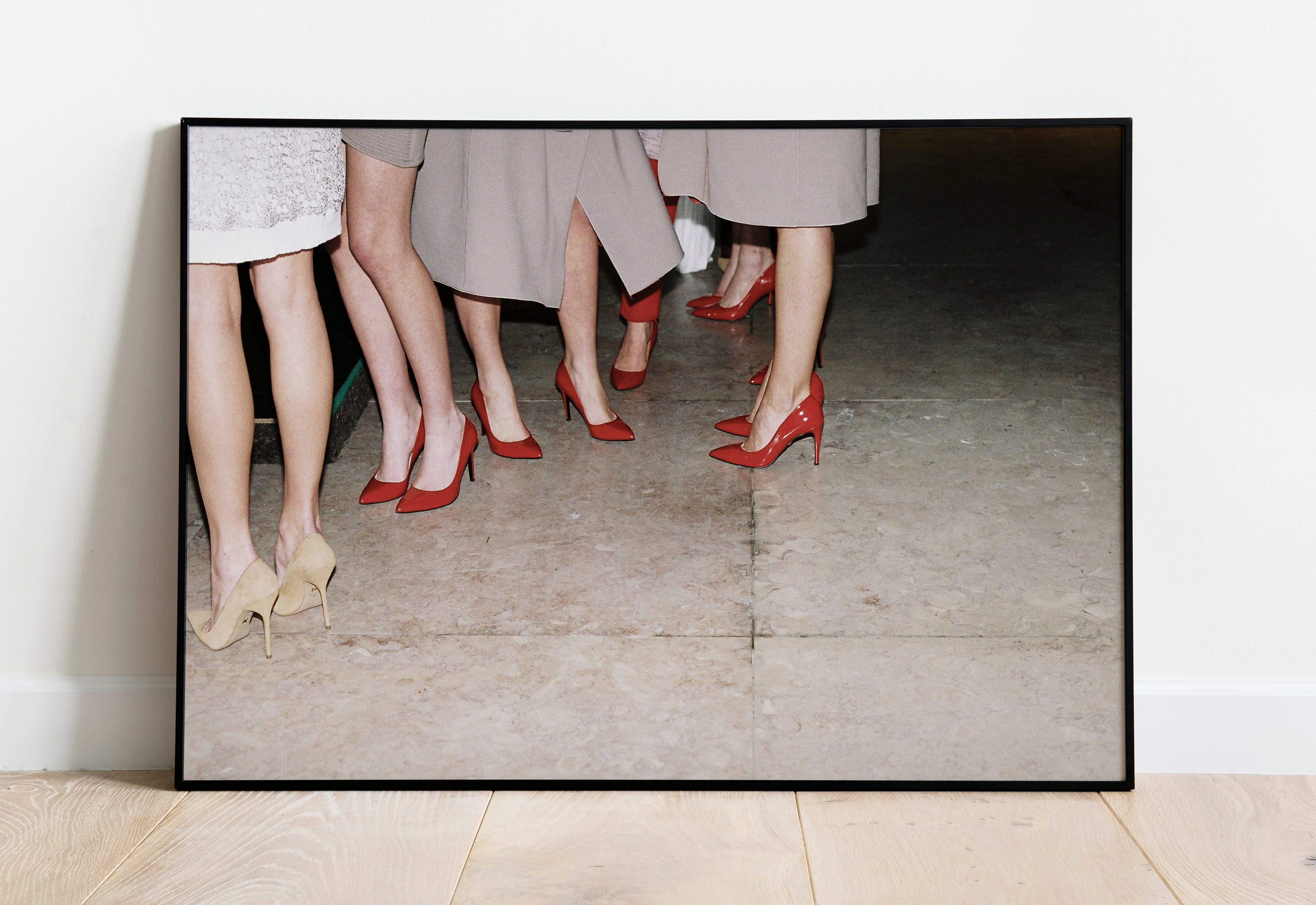
That last one happened recently - I'm working on a collection that exists entirely in tones of red, and somewhere in the process I realised it meant something I hadn't consciously intended. That's exactly the kind of thinking that doesn't show up in the finished work, but that shapes everything about it
As an artist, I've spent years sharing the conclusions. The finished photograph, the painting, the final piece - but very little of the thinking that got me there.
And lately, I've started to wonder if that thinking might be worth sharing too. Which led us here:
"I Digress"
An expression my friends and I use constantly - not because I lose the thread, but because following it often leads somewhere more interesting than where I originally intended to go.
So, hoping some of you find it interesting as well, I'll be here.