
One of the things I love most about reading is that books have this annoying habit of making me notice things I probably wouldn’t have noticed otherwise. Lately, they’ve been making me notice brands. Confused? Yes, me too.
People often assume brands create cultural shifts, but in my opinion the opposite is usually true - the best ones just notice them first. Which, oddly enough, makes brands some of our best cultural barometers.
Anyway, let’s get back to books. I was saying... books everywhere.
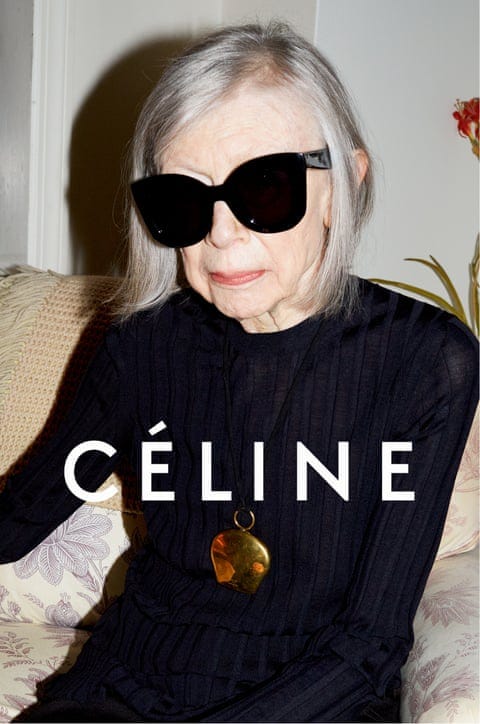
Joan Didion for Céline. Photographer: Juergen Teller
Not only in bookshops, but across fashion, luxury, advertising, and retail spaces - in the places where culture quietly rehearses itself before the rest of us realise something has changed.
And once you start paying attention, they’re surprisingly difficult to ignore - you don’t need to take my word for it; let’s see:
Marc Jacobs opened his coffee table bookshop, Bookmarc.
Celine’s casting of author Joan Didion as the star of a 2015 campaign.
Miu Miu has a Literary Club that brings together writers, academics and Pulitzer Prize winners for talks.
Saint Laurent turned one of its Paris boutiques into a bookstore.
Chanel has quietly built an international literary programme around seasonal reading lists and conversations with writers.
Brunello Cucinelli is building what he calls a universal library at the company’s headquarters in Umbria.
Coach partnered with Penguin Random House to turn classic novels into bag charms.
Dior embroidered literary classics onto one of its most recognisable bags.
Dua Lipa - whose Service95 I have to admit I genuinely love - and her book club, or her recent partnership with Livraria Lello in Porto, to create the Manifesto Library.
I mean, the list goes on; we could be here for quite some time...

The question isn’t why books are suddenly appearing everywhere. For me, the question is: what have books come to represent?
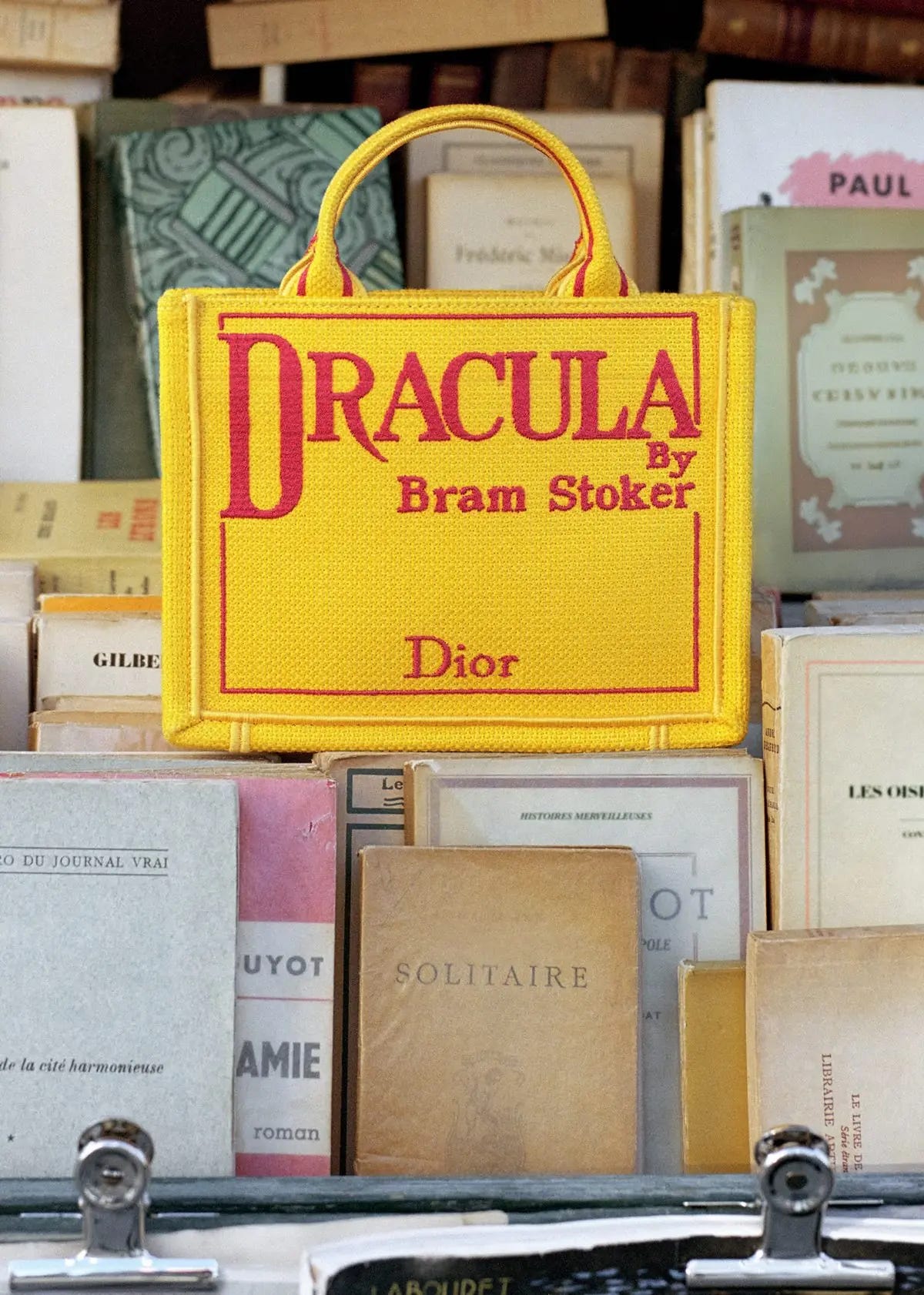
I’m not naive; taste signalling has become a holy grail at a time when every brand is obsessed with “authenticity”, and books do communicate something about the people who read them. Increasingly, they also seem to communicate something about the people who carry them. We all know a publication or bookstore tote bag that has quietly become a “status symbol”, and reading lists are shared almost like playlists. It’s no wonder so many brands are turning to literature to create deeper storytelling, offline experiences and cultural differentiation.
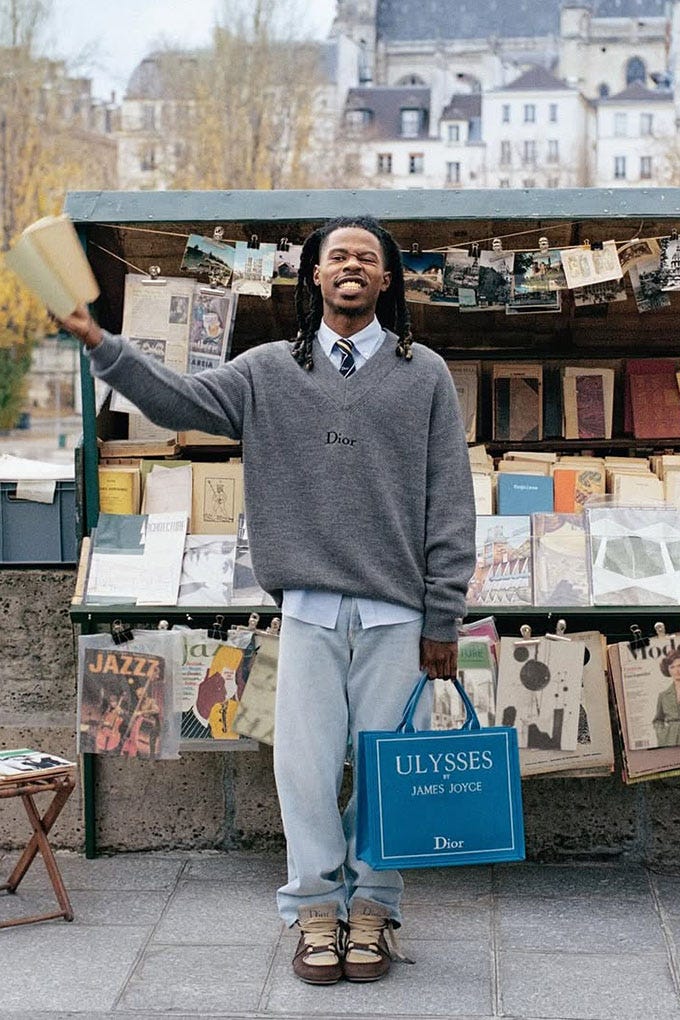
Entire identities are now built around cultural consumption, and yet... I don’t think that’s the whole story.
There seems to be a common thread in this return to analogue experiences (film photography, vinyl, craft, ceramics, now books), and it’s no wonder people keep asking whether we’ve reached peak stimulation.
On a bad day, it feels like we’ve quietly replaced entertainment with distraction - no wonder we’re all so fatigued. Art is increasingly competing with distraction; we are chronically online, algorithms are devouring our days, and perhaps we’re deeply looking for an intellectual connection somewhere else. If you're interested in this idea, Ted Gioia has written brilliantly about it.
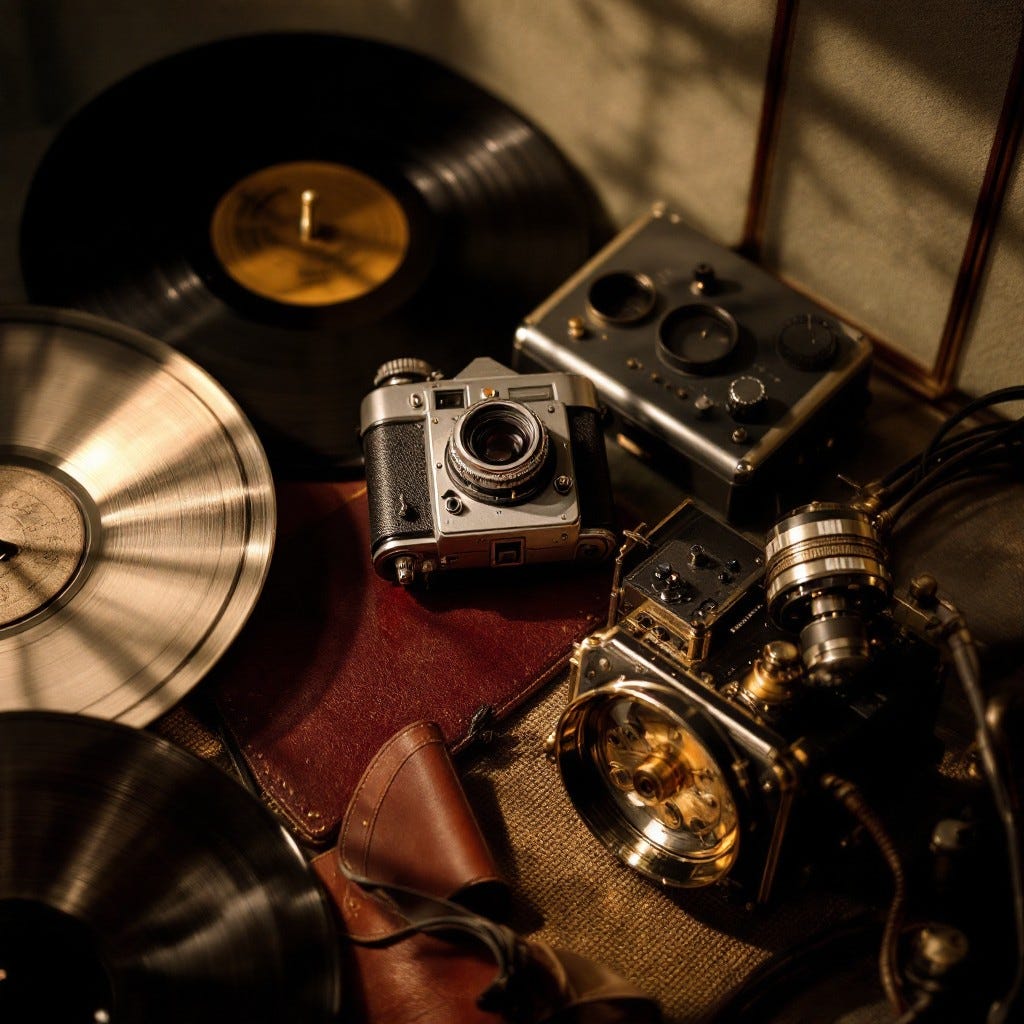
Anyway, so much of what surrounds us now competes inside systems that reward interruption over attention. Maybe that’s why books suddenly feel different.
Maybe, after years of trying to make everything faster, we’ve started craving experiences that refuse to be optimised.
Literature feels like a natural next step, particularly at a moment when “offline” has quietly become aspirational again.
A book asks for intention - and luxury is increasingly selling the fantasy of intentional living- it asks you to stay with one person’s train of thought for hundreds of pages without promising a reward every thirty seconds.
Which, as we all know, is becoming surprisingly rare.
I wonder if that’s part of what brands are responding to - not books themselves, but what books have come to represent. Qualities that have become increasingly desirable.
Luxury, it seems to me, has become increasingly interested in selling ways of thinking. Or perhaps just the appearance of them - I’m genuinely not sure.
Having said all of this, something else has been sitting with me. I also can’t help wondering whether books are “returning” because they’re one of the few places where thinking still unfolds differently.
No one believes that books necessarily make us smarter; we can get knowledge from so many places, but the written word asks something different from us - at least from me. Books organise a thread of thought that tends to be more reflective, in a slower and denser way than endless scrolling. Reading a book asks us to stay with an idea for a little longer before deciding whether we agree with it.
Maybe books really are just becoming another status symbol.
Maybe brands have simply found another cultural language to borrow.
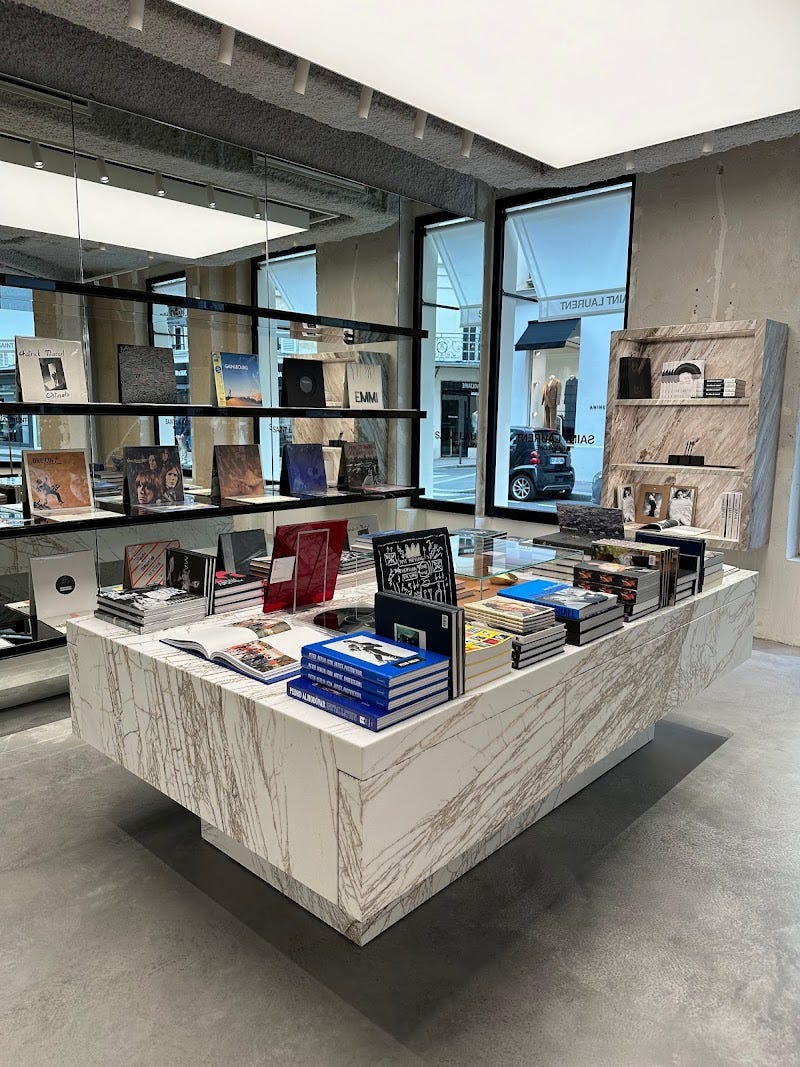
Saint Laurent Babylone - 9 Rue de Grenelle, Paris
What I do know is that I find it fascinating that, at a time when almost everything around us is competing to become faster, shorter and more efficient... Books seem to be quietly making their way back into the conversation.
Not simply as products.
As symbols.
So, if fashion is making books fashionable again, and if that makes more people read (search for numbers about books sold in the first semester of 2026 compared with previous years), if following fashion trends eventually leads someone towards reading philosophy, discovering a novelist they would never have picked up otherwise, or simply spending an afternoon with a book instead of another algorithmic feed... then I’m not entirely convinced that’s such a bad trend to follow.
And perhaps the more interesting question is: what happens when books stop being fashionable again?